
About Dr Irfan Rahman
Dean’s Professor, Environmental & Inhalation Toxicologist, Global Scientific Leader
PROFESSIONAL OVERVIEW
Internationally Recognized Leader in Environmental Health & Lung Disease Research
Dr. Irfan Rahman is a Dean’s Professor of Environmental Medicine, Medicine (Pulmonary), Public Health Sciences, and General Dentistry at the University of Rochester Medical Center. He is also the Director of the Center for Inhaled Flavoring Toxicology, where he leads cutting-edge research on inhaled toxicants, vaping, environmental exposures, redox biology, lung aging, COPD, and precision environmental health.
Early Life and Education
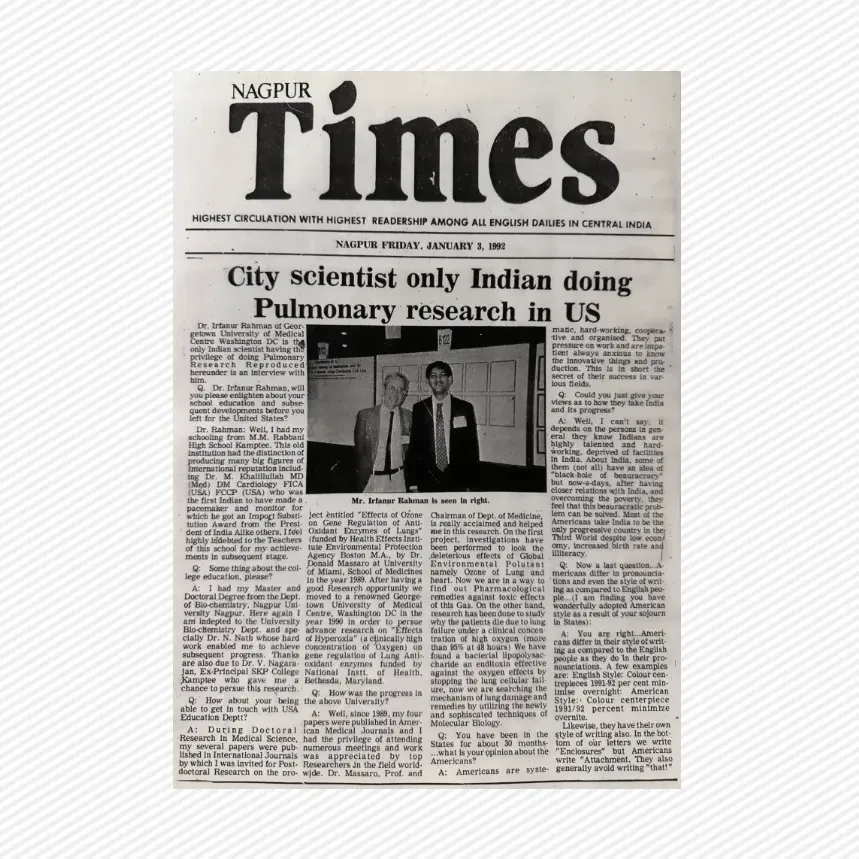
Irfan Rahman was born in the city of Bhopal, India. During the Bhopal disaster, he was in his late teens when a pipeline at a Bhopal-based Union Carbide Corp. affiliate leaked, releasing a cloud of toxic gas leading to many deaths and life-long injuries including lung ailments.
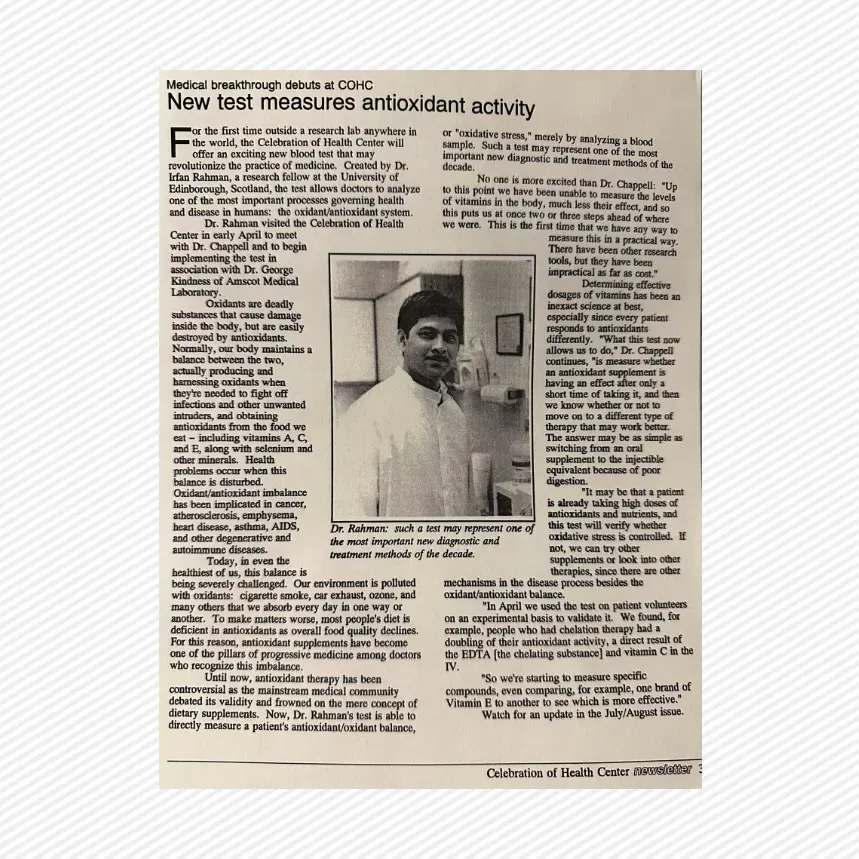
Irfan holds a Ph.D. in Biochemistry on neutrophil functions in hypertension. He carried out his early education at Rabbani High School, St Francis de Sales College, and Nagpur University, Nagpur (India). He completed a postdoctoral fellowship on lung toxicology at the University of Miami and Georgetown University., before relocating to the University of Edinburgh, where he focused on environmental agents and lung inflammation and received an appointment as a Senior Research Scientist/Lecturer
Career
Irfan is a Dean’s Professor at the Department of Environmental Medicine, Medicine (Pulmonary), University of Rochester Medical Center, USA, Public Health Sciences and General Dentistry at the University of Rochester Medical Center (School of Medicine and Dentistry), NY.
He works extensively on understanding mechanisms affecting lung function and pathology in various respiratory diseases by external factors, such as environmental smoke and air pollution. Irfan primarily focuses on research regarding oxidative stress, inflammation, molecular clock, mitochondrial dysfunction, epigenetics, and cellular senescence by environmental tobacco smoke/tobacco products (cigarette smoke, e-cigarettes, flavoring chemicals in e-cigarettes, waterpipe/hookah, iQOS, CBD/THC, and cigars), airborne particulate matter, ozone, carbon nanotubes, nanoparticles and PFOS/PFAS Perfluorooctane sulfonic acid/perfluorinated alkylated substances, also called perfluorochemicals (PFCs) in the lung (Chronic Obstructive Pulmonary Disease and Idiopathic Pulmonary Fibrosis/Interstitial Lung Diseases), as well as oral/periodontal diseases. His major research emphasis and focus have been on understanding the pathophysiology of chronic inflammatory lung diseases particularly Chronic Obstructive Pulmonary Disease (COPD)/emphysema, lung cancer, and pulmonary fibrosis.
His major research emphasis and focus have been on understanding the pathophysiology of chronic inflammatory lung diseases particularly Chronic Obstructive Pulmonary Disease (COPD)/emphysema, lung cancer, and pulmonary fibrosis which is imposed by cigarette smoke/e-cigarettes/hookah or waterpipe tobacco smoke, and environmental air pollution. Irfan has gained international recognition for his research on the prevention and treatment of smoking-induced lung diseases and has published more than 350 papers/articles in peer-reviewed journals with more than 50,000 citations along with an impact factor of more than H=105.
Irfan has several patents on his remarkable discoveries and findings, e.g., patents on biomarkers for identifying e-cigarette, or vaping, product use-associated lung injury, and methods of treating chronic inflammatory diseases.
Irfan has several patents on his remarkable discoveries and findings, e.g. patents on biomarkers for identifying e-cigarette, or vaping, product use-associated lung injury, and Methods of Treating chronic inflammatory diseases. Irfan Rahman has been featured in several interviews and publications over the years, including CBS News, NBC News, Forbes, and Hindustan Times, to name a few.
Education & Training
Foundational Academic and Research Development Across United States, United Kingdom, and Globally including India
Dr. Irfan Rahman’s academic training spans rigorous biomedical education and advanced interdisciplinary research in molecular toxicology, redox biology, environmental health, COPD and IPF mechanisms, lung aging, and inhalation toxicology. His scientific development integrates biomedical foundations with international postdoctoral and fellowship experiences across three countries.
375 +
Publications across journals, reviews, and book chapters
0.1%
Of top global scientists
3x
Highly Cited Researcher (2014–2016)
30+
Major national & international awards
16th
Ranked worldwide in Respiratory & Allergy
Inventions
Dr Irfan Rahman has filed for patents to protect the following inventions. This listing includes patent applications that are pending as well as patents that have already been granted by the United States Patent and Trademark Office (USPTO).
-
Publication number: 20140080795
-
Abstract: Methods for the treatment or prevention of diseases which are caused by the decreased concentrations of histone deacetylase 2 (HDAC2) in cells are described. The diseases which may be treated by the methods of the invention include chronic obstructive pulmonary disease (COPD) and asthma, including steroid resistant COPD and asthma. The invention provides methods for treating or preventing of diseases caused by the degradation of HDAC2 by providing to the subject in need of treatment or prevention a molecular compound capable of preventing the degradation of HDAC2. Such molecular compounds include Nuclear factor (erythroid-derived 2)-like 2 (Nrf2) activators. Methods are further provided for the treatment and prevention of COPD and asthma by providing to a subject in need of such treatment and prevention a nucleic acid which causes expression of HDAC2 in lung cells and/or a nucleic acid which causes expression of Nrf2 in lung cells.
-
Type: Application
-
Filed: November 18, 2011
-
Publication date: March 20, 2014
-
Applicant: University of Rochester
-
Inventors: Irfan Rahman
-
Publication number: 20230236207
-
Abstract: The present invention generally relates to novel biomarkers and their methods of use for identifying and treating e-cigarette, or vaping, product use-associated lung injury (EVALI)
-
Type: Application
-
Filed: January 24, 2023
-
Publication date: July 27, 2023
-
Inventors: Irfan Rahman, Matthew McGraw
-
Publication number: 20120183524
-
Abstract: Molecular targets and methods for treating inflammatory disorders are described. The expression and/or functionality of molecular targets RelB or SIRT1 is modified in order to treat inflammatory disorders. The expression of RelB or SIRT1 may be increased, or the activity of RelB or SIRT1 may be increased in order to inhibit transcription factors which activate genes involved in inflammation. Inflammatory disorders such as chronic obstructive pulmonary disorder, rheumatoid arthritis, asthma and idiopathic pulmonary fibrosis are indicated.
-
Type: Application
-
Filed: August 8, 2008
-
Publication date: July 19, 2012
-
Inventors: Irfan Rahman, Matthew McGraw
-
Publication number: 20120022129
-
Abstract: Methods for the treatment or prevention of diseases which are caused by the degradation of histone deacetylase 2 (HDAC2) in cells are described. The diseases which may be treated by the methods of the invention include chronic obstructive pulmonary disease (COPD) and asthma. The invention provides methods for treating or preventing of diseases caused by the degradation of HDAC2 by providing to the subject in need of treatment or prevention a molecular compound capable of preventing the degradation of HDAC2. Such molecular compounds include protein kinase CK2 inhibitors, ubiquitination inhibitors, ubiquitin-proteosome inhibitors, nuclear factor (erythroid-derived 2)-like 2 (Nrf2) activators and MAPK phosphatase 1 activators. Methods are also provided for the treatment and prevention of diseases caused by the degredation of HDAC2 by interfering with the expression of protein kinase CK2 or by increasing expression of Nrf2.
-
Type: Application
-
Filed: February 18, 2011
-
Publication date: January 26, 2012
-
Inventors: Irfan Rahman, Matthew McGraw
SCIENTIFIC LEADERSHIP
Leadership & Professional Service
New York Academy of Sciences
- Member
- 2009 - Present

American Thoracic Society / American Lung Association
- Member
- 1993 - Present

American Physiological Society
- Member
- 2011 - Present

International Society for Free Radical Research, USA
- Member
- 1991 - Present

British Association for Lung Research
- Member
- 1995 - Present

Indian Society of Hypertension
- Founder member
- Since Foundation

Society of Free Radical Research, India
- Life Member
- 1991 - Present
Society of Toxicology
- Permanent Member
- 1996 - Present
Environment Mutagenesis and Genomics Society
- Permanent Member
- 2023 - Present

Society For Research On Nicotine and Tobacco
- Permanent Member
- 2021 - Present

Society for Redox Biology and Medicine
- Permanent Member
- 2023 - Present

PrePrints
- Board member of Medicine and Pharmacology
- Present
Accomplishments
2021
-
Moderator and Facilitator | Meet the Expert Session: ME012 LUNG AGING - NEW PRECLINICAL MODELS AND MECHANISMS OF CELLULAR SENESCENCE. ATS 2021 Monday, May 17, 2021
-
Discussant | PGME Course Proposal for ATS 2020 (May 14-19, 2021, San Diego, CA) entitled: “From the ICU to basic research: E-cigarettes and the EVALI epidemic”. American Thoracic Society (ATS) The EVALI Epidemic: Pathogenesis, Management and Future Directions
-
Invited Talk | ATS 2021: NIEHS-Environmental Exposures and Covid-19 Susceptibility, Invited Talk Title: Increased susceptibility to Covid-19 infection by alterations of SARS-CoV2 interacting proteins by stress in smokers/vapers, May 14-19, 2021
2020
-
COVID-19 Committee | DR2 EHS-NIEHS working group
-
Member | American Thoracic Society Tobacco Control Task Force
-
Member | American Federation for Aging Research AFAR’s National Scientific Advisory Council (NSAC).
-
President | Society of Toxicology, IRSS Visit: https://www.toxicology.org/groups/ss/IRSS/exec_comm.asp
2019
-
Vice-President | Society of Toxicology, IRSS Visit: https://www.toxicology.org/groups/ss/IRSS/exec_comm.asp
-
Spotlight webpage | Selected by the NIEHS EHSC Visit: https://www.niehs.nih.gov/research/supported/centers/core/spotlight/
https://www.niehs.nih.gov/research/supported/centers/core/spotlight/rahman/index.cfm -
Founding Chair | Lung Aging Research Interest/Working Group of the American Thoracic Society Visit: http://www.thoracic.org/members/assemblies/assemblies/rcmb/working-groups/lung-aging-research/
2018
-
American Thoracic Society Fellow from the Directorates of the ATS
-
Member | Specialty Section Collaboration and Communication Group (SS-CCG), SOT
-
Vice-President Elect | Society of Toxicology, IRSS
2016
-
Elected as a Councillor | Inhalation and Respiratory Specialty Section (IRSS)
Publications
-
Listed as Highly Cited Researchers, 2014, 2015, and 2016 in Toxicology and Pharmacology by Thomson Reuters
-
H-index=122 by googlescholar http://apps.webofknowledge.com/ (Thomson Reuters) https://www.webometrics.info/en/hlargerthan100
-
Research Gate IF: 46.81
-
ORCID Identifier: 0000-0003-2274-2454
-
Scopus Author ID: 7007017874
Research Interests
Current Theme
Inflammation, cellular senescence, exosomes, and tobacco science
Long-term interests
Basic Biology to Translational Research in Environmental Lung Biology/Environmental Inhalation/Occupational Toxicology, Cell/Biochemistry/Molecular Biology, Toxicology, Pharmacology, and Disease
Dr Irfan Rahman's research interests include environmental/inhalation toxicology: oxidants, antioxidants (glutathione and polyphenols), regulation of redox-sensitive transcription factors, mechanism of proinflammatory and antioxidant gene expression, redox signaling – molecular gene regulation and chromatin remodeling-epigenetic changes (histone acetylation/deacetylation), mitochondrial dysfunction, cellular senescence, involvement of anti-inflammatory and anti-aging proteins sirtuins in chronic inflammatory diseases. Overall, my long-term goal is to understand the cellular and molecular mechanisms of inhaled toxicants’mediated chronic lung diseases i.e. the pathogenesis of chronic obstructive pulmonary disease (COPD), lung cancer and pulmonary fibrosis, and the potential benefit of pharmacological therapeutic interventions in these debilitating diseases especially in relation to chronic inflammation and mitochondrial dysfunction in premature aging/chronic diseases.
KEY RESEARCH DOMAINS
Environmental Inhalation Toxicology/Carcinogenesis
Cellular and molecular redox mechanisms of airway inflammation and senesence: Oxidative stress, glutathione/thiols, mitophagy/mitochondrial dysfunction, transcription factors (NF-kB, AP-1, and FOXO3), endothelial dysfunction, cytokines, circadian rhythm, glucocorticoid, epigenetics and chromatin remodeling in smokers and COPD, lung cancer, and pulmonary fibrosis using a variety of in vitro, ex-vivo and in vivo models in response to tobacco products (conventional, e-cigarettes, flavoring, hookah/waterpipe tobacco smoke) and environmental toxicants (particulate matter and nanoparticles/ultra fine particles), climate change smoke and lung health effects using cellular, molecular and imaging techniques.
Biomarkers of Disease
Non-invasive detection and development of biomarkers of oxidative stress and inflammation in smokers, asthma, fibrosis and COPD.
Pharmacology and Dietary Interventions
Molecular mechanisms of novel synthetic and dietary antioxidant (polyphenols/bioflavonoids, e.g. curcumin, resveratrol, quercetin) and novel anti-inflammatory compounds in attenuation of chronic lung inflammation and overcoming steroid resistance in response to cigarette/tobacco smoke
Epigenetics, Mitochondria, Molecular clock and Lung Aging/Senescence
The goal is to determine the molecular clock disruption, air pollutants, and environmental (ETS, aldehydes, PAHs) exposures leading to debilitating conditions and their exacerbations in aging, and what molecular pathways (epigenetics, mitochondrial dysfunctionk, cellular senescence) involved leading to prophylactic and therapeutic strategies for interventions of diseases of lung aging and cancer.
Equity, Diversity & Inclusion (DEI) activities
Dr Irfan Rahman is committed to consider equity, diversity, and inclusion criteria when he recruit students and fellows for the Program.
Dr. Irfan Rahman's lab is committed to URMC defined core principles of maintaining a safe and inclusive environment for everyone, irrespective of race, age, gender, gender identity, sexual orientation, religion, nationality, ethnicity, socio-economic status, ability as well as cultural, political, or other affiliations. This lab is committed in promoting a respectful lab environment and being transparent in our teaching and research with maintaining the ethical standars. Dr. Rahman's team believes that open, honest communication, professionalism in science, and a diverse workforce allows creation of new ideas and service to community.
- We take full consideration of equity, diversity, and inclusion when recruiting both undergraduate and graduate students into our research team
- Currently, 50% of our project research assistants are women and 33% of our project research assistants are minorities
- We recruit subjects from diverse groups for our funded project which examines the impact of the FDA e-cigarette flavor enforcement policy through an online study
- We follow the DEI criteria when selecting candidates for our programs
Advisory Committees
Preprints.org (Advisory Board Member)
Present
Univesity of Highlands and Islands, European-Scottish Lipidomics Center (honorary)
2010 - 2015
Boehringer Ingelheim, Germany
2009 - 2010
Kiel Laboratories, Inc., Gainesville, GA
2011
Merck Research Laboratoroies (COPD Scientific Advisory Board)
2011
Proctor & Gamble (P&G) (Scientific Advisory Board)
2013
DEGRESS
Formal Education
B.Sc
Biology & Chemistry
- 1981
- University of Nagpur
- India
MSc
Biochemistry
- 1983
- University of Nagpur
- India
PhD
Biochemistry
- 1988–1989
- University of Nagpur
- India
Training-related Professional Roles
Academic & Research Appointments
Lecturer
Biochemistry
- University of Nagpur
- India
Research Scientist / Lecturer
Senior
- University of Edinburgh
- UK
Respiratory Cell & Molecular Biology
Lecturer
- University of Edinburgh
- UK
Research Fellowships
Honorary Fellow
Fellow
- University of Edinburgh
- Edinburgh, UK
Chest Heart and Stroke Association
Travel Fellowship
- American Thoracic Society Meeting
- San Francisco, USA
British Lung Foundation/Allen Hanburys
Travel Fellowship
- American Thoracic Society Meeting
- San Francisco, USA
Scottish Chest Heart and Stroke
Travel Fellowship
- American Thoracic Society Meeting
- San Francisco, USA
IX Biennial International Meeting
Travel Fellowship
- International Free Radical Society
- Sao Paolo, Brazil
European Respiratory Society
Travel Fellowship
- World Lung Congress
- Florence, Italy
Free Radical Research
Travel Fellowship
- The Royal Society
- Sao Paolo, Brazil
Astra
Travel Fellowship
- American Thoracic Meeting,
- New Orleans, USA
Japan International Science and Technology
Exchange Fellowship
Canadian Lung Association/Canadian Lung Foundation
Fellowship
PRE-DOCTORAL TRAINING
Research Fellowships
Research Fellowship
Junior
- 1983–1985
- Council of Scientific & Industrial Research (CSIR)
- India
Research Fellowship
Senior
- 1985–1987
- Council of Scientific & Industrial Research (CSIR)
- India
POST-DOCTORAL TRAINING
Advanced Research Training
Postdoctoral
Fellow
- University of Miami
- USA
Postdoctoral
Research Associate
- Georgetown University
- USA
Postdoctoral
Fellow
- University of Edinburgh
- UK
Early Scientific Development & Research Foundations
Initial Focus Areas That Shaped a Global Research Program
During early academic and research periods, he developed:
- Oxidative stress research models
- Environmental exposure and toxicology assays
- Redox and antioxidant biology frameworks
- Lung injury and inflammation modeling
- Foundational epigenetic theories of disease
- Mitochondrial dysfunction paradigms in lung disease
These formative insights directly influenced his later breakthroughs in COPD, lung aging, vaping toxicology, and molecular interventions.
Specialized Scientific Training
Deep Training in Mechanisms of Lung Injury, Toxicology & Redox Biology
- Inhalation toxicology
- Environmental health sciences
- Oxidative stress mechanisms and redox regulation
- Epigenetics and chromatin biology (HDACs, SIRTs, histone modifications)
- Mitochondrial bioenergetics & metabolic dysfunction
- COPD pathogenesis & lung aging
- Immune & inflammatory signaling
- Toxicology of cigarettes, e-cigarettes, aerosols, flavorings, and vaping products
These competencies later became signature elements of his scientific career.
Education & Training - Numerical Highlights
A Snapshot of Academic Formation & Scientific Growth
3
Academic degrees in Biochemistry (B.Sc., M.Sc., Ph.D.)
3
Major international research institutions (USA & UK)
375 +
Advanced training phases:
- Postdoctoral
- Research Training
- Research Fellowship
10 +
Specialized scientific domains mastered during formative years
3
International trainings
- India
- United States
- United Kingdom